

Political Animals
The Architecture of Xavier De Geyter Architects
Philip Ursprung
DOWNLOAD THE FULL ESSAY IN PDF
In his treatise Politics (Greek politiká, 350 B.C.), Aristotle states: "Hence it is evident that the state is a creation of nature, and that man is by nature a political animal. And he who by nature and not by mere accident is without a state, is either a bad man or above humanity; he is like the 'tribeless, lawless, heartless one', whom Homer denounces &mdash the natural outcast is forthwith a lover of war; he may be compared to an isolated piece at draughts".
'Man is a political animal' is still an often-quoted sentence, more than two thousand years since Aristotle wrote it. His treatise became the basis of Western anthropology and remains one of the fundamental references of political philosophy. Firmly rooted in his travels and connections to political rulers &mdashhe was the teacher of the future Alexander the Great&mdash the treatise differs in its pragmatic approach from the idealism and more hierarchic approach of the treatise Republic (Greek politeia, 375 B.C) by his mentor Plato. For Aristotle, the "state is by nature clearly prior to the family and to the individual, since the whole is of necessity prior to the part".
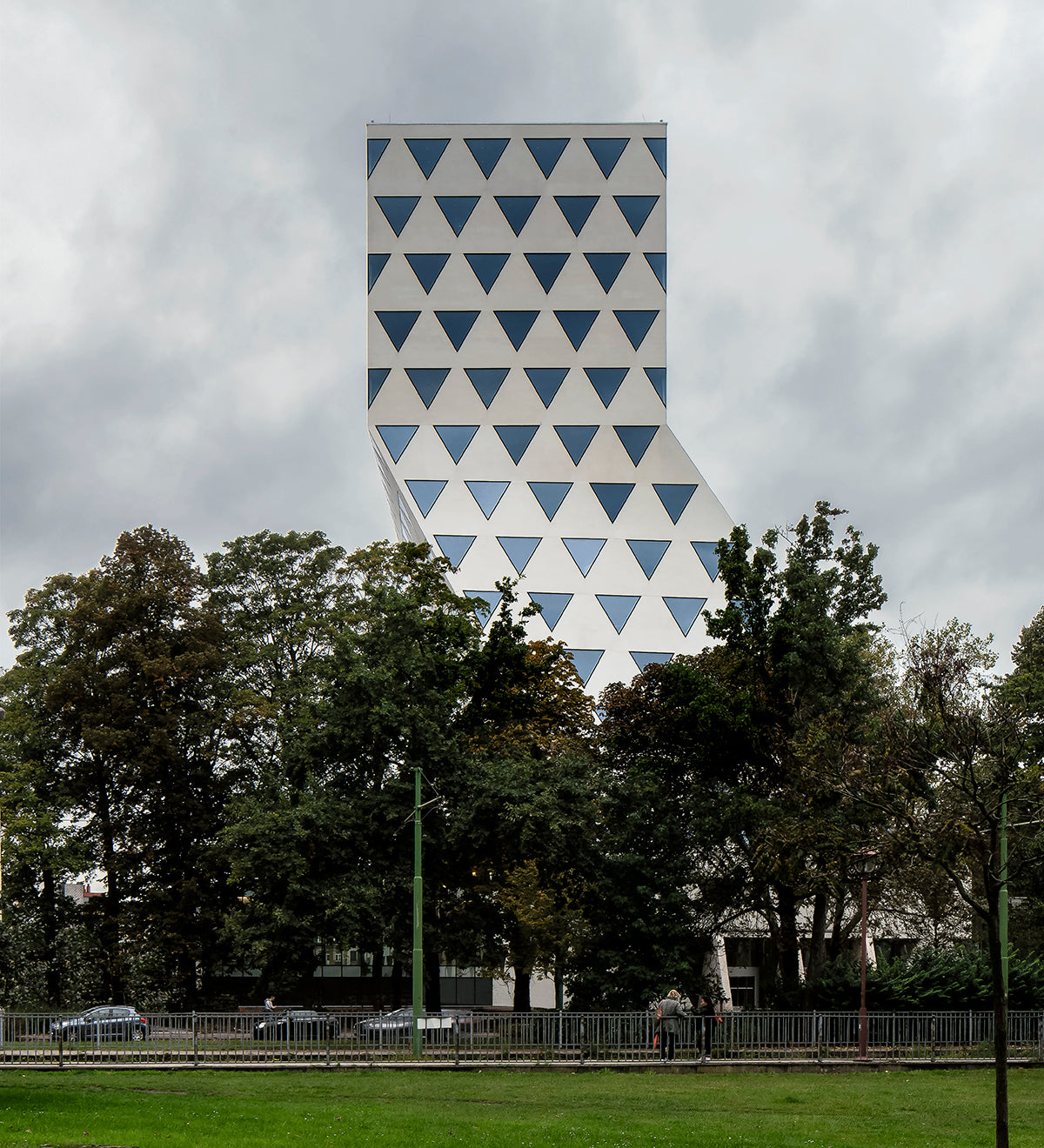
I assume that Xaveer De Geyter, if he were to choose, would adhere to Aristotle's inductive view of the political which is informed by concrete observation and systematization rather than to the more deductive and speculative approach of Plato. De Geyter grew up and was trained in Belgium during the heyday of the Western European Welfare States. For a decade, from the 1980s to the early 1990s, he worked with Rem Koolhaas' Office for Metropolitan Architecture in Rotterdam. Since 1988 he has been directing his own office in Brussels and more recently another office in Paris. In other words, De Geyter has continuously been at the very heart of one of the biggest political endeavours of the second half of the 20th century &mdash European integration.
By coincidence, De Geyter and the European Union were born in the same year. The Treaty of Rome, which formally established European Economic Community, was signed in 1957. Already in 1951, Belgium was one of the six countries that founded the European Coal and Steel Community, together with France, Germany, Italy, Luxembourg and the Netherlands. During the 1960s, Brussels emerged as the headquarters for most of Europe's major institutions. It now houses the European Commission, the European Council and, since 1985, the European Parliament, together with the official seat, Strasbourg. In 1967, NATO moved its headquarters from Paris to Brussels. Since then, Brussels is not only the political but also the military hub of Europe. The rapidly growing institutions occupied innumerable buildings for their offices and meeting spaces, some hastily transformed from older structures, many newly built from scratch. Furthermore, tens of thousands of administrators, politicians, diplomats, lobbyists and journalist have moved in and out of the city over the years. Although the European Union has no formal capital, Brussels has held this de facto position for half a century.